Real systems we've built for UAE businesses
We automate the manual work inside UAE small businesses: customer registration and intake, job and order tracking, WhatsApp updates, bookings, and the back-office paperwork behind them. Custom-built systems your staff actually use, deployed in days.
One measurable outcome, agreed in writing before we start. How the guarantee works →
Free 30-minute call, then we watch the real work. The report tells you how many hours a week you would get back.Rental business, Abu Dhabi: paper forms to digital registration in 6 days
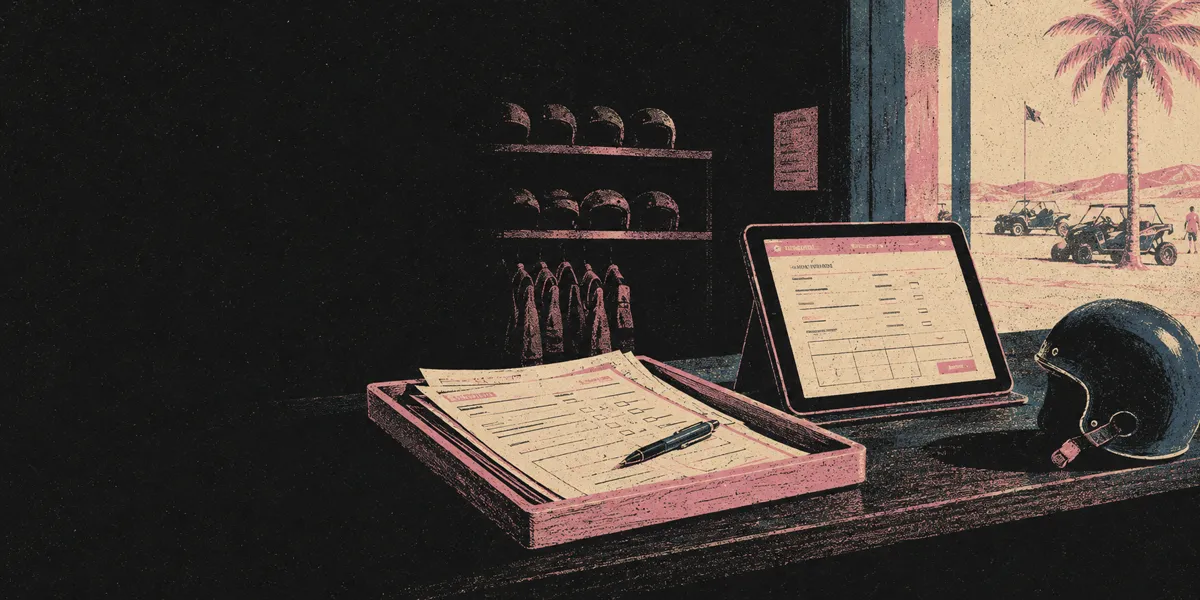
The business ran entirely on paper. Registration took 7 minutes 15 seconds per customer, longer for groups. No customer database, no automated follow-up, no digital record of who rented what. We deployed a full digital system in 6 days. Registration now takes 1 minute 10 seconds from walk-in to walk-out.
- Custom staff dashboard, built for tablets at the counter
- Digital registration with automatic waiver delivery
- Live tracking of every active rental
- A customer database that grows with every visit
Illustrative mockup of the counter view. Placeholder records, not live customer data.
- What the system covers
- A counter dashboard on tablets, a customer registration form with a bilingual waiver and digital signature, a live view of which bikes are out and with whom, and a waiver that sends itself the moment a customer registers. The business ran on paper, so nothing they already paid for was replaced.
- What we did not build
- No payment processing, no online booking, no revenue reporting, no till or point-of-sale integration, and no marketing messaging. The system records how a rental was paid and what was charged; it does not take the money. Each of those was raised and deliberately left out so the system could go live in the same week.
- Delivery
- Six days from the assessment to a live system, deployed on site at the counter.
- Training
- On site with counter staff, on the tablets they use, during opening hours. Printed step-by-step guides left behind as the fallback for when the system or the connection is unavailable. A separate session with the owner covering data backups.
- What changed after launch
- Real use surfaced what a plan does not. Two customers sharing a name. Phone numbers a digit apart. Staff needing to see who had just registered while a queue was building. Each was fixed as it appeared over the following weeks, and the system has run on its own since.
Bike repair shop, Dubai: from memory to a live job pipeline
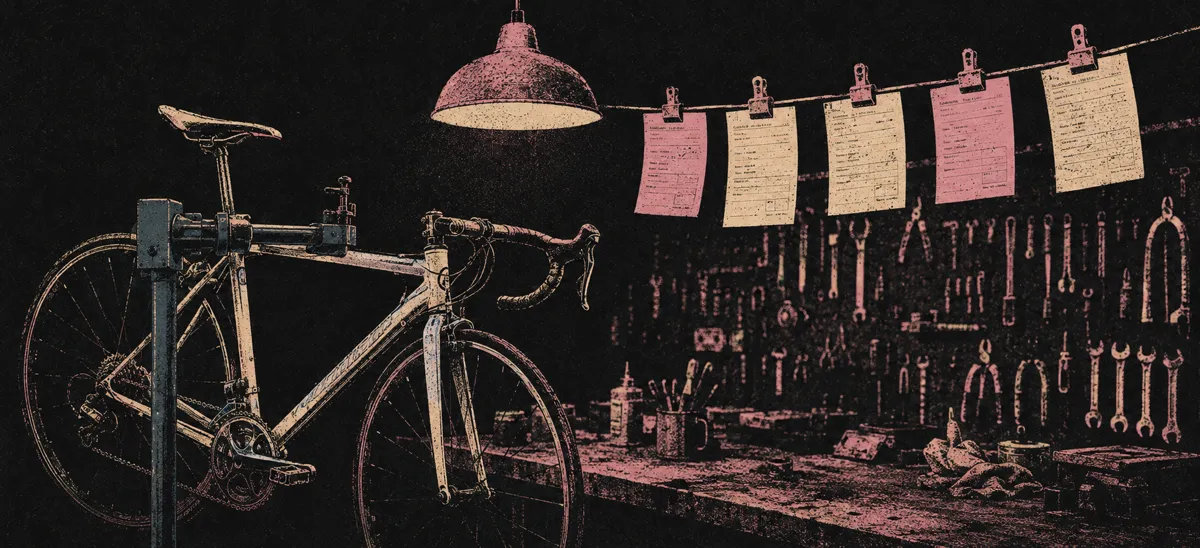
A repair shop tracking everything from memory. Jobs lived in people's heads, with the occasional note or WhatsApp message. Customers called multiple times a day for updates, and staff had to stop work, physically check the bike, and call back. We replaced it with a digital job pipeline the staff run themselves.
- Digital job board covering all 14 service types, from 45-minute washes to multi-day repairs
- Photo capture before any work starts
- A live status page customers open from their phone, no app, no calls
- The owner sees every active job without being at the shop
Illustrative mockup of the job board. Placeholder records, not live customer data.
- What the system covers
- A staff job board behind a PIN, covering all 14 service types. Photographs taken at intake before any work starts. A twelve-stage pipeline staff move a job through with one tap. Automatic WhatsApp updates to the customer at the stages that matter, including an approve-or-decline message for work that needs a decision. A read-only status page linked in every message. The owner sees every active job without being in the shop.
- What we did not build
- No till or payment integration, because their existing point-of-sale already handles it. No parts inventory or ordering. No appointment booking. No marketing or bulk messaging. No SMS. No camera integration. No revenue reporting. Each was raised, priced separately, and left out of the build.
- Delivery
- Deployed on site over a full day in the shop, on the machines and phones the team actually use.
- Training
- A full day on site with the staff who run the board, during working hours, on real jobs coming through the door.
- What changed after launch
- The board picked up a staff notes field and a faster way to select several services on one job, both of which came from watching the shop use it rather than from the plan.
3D printing studio: orders through a form instead of chat threads
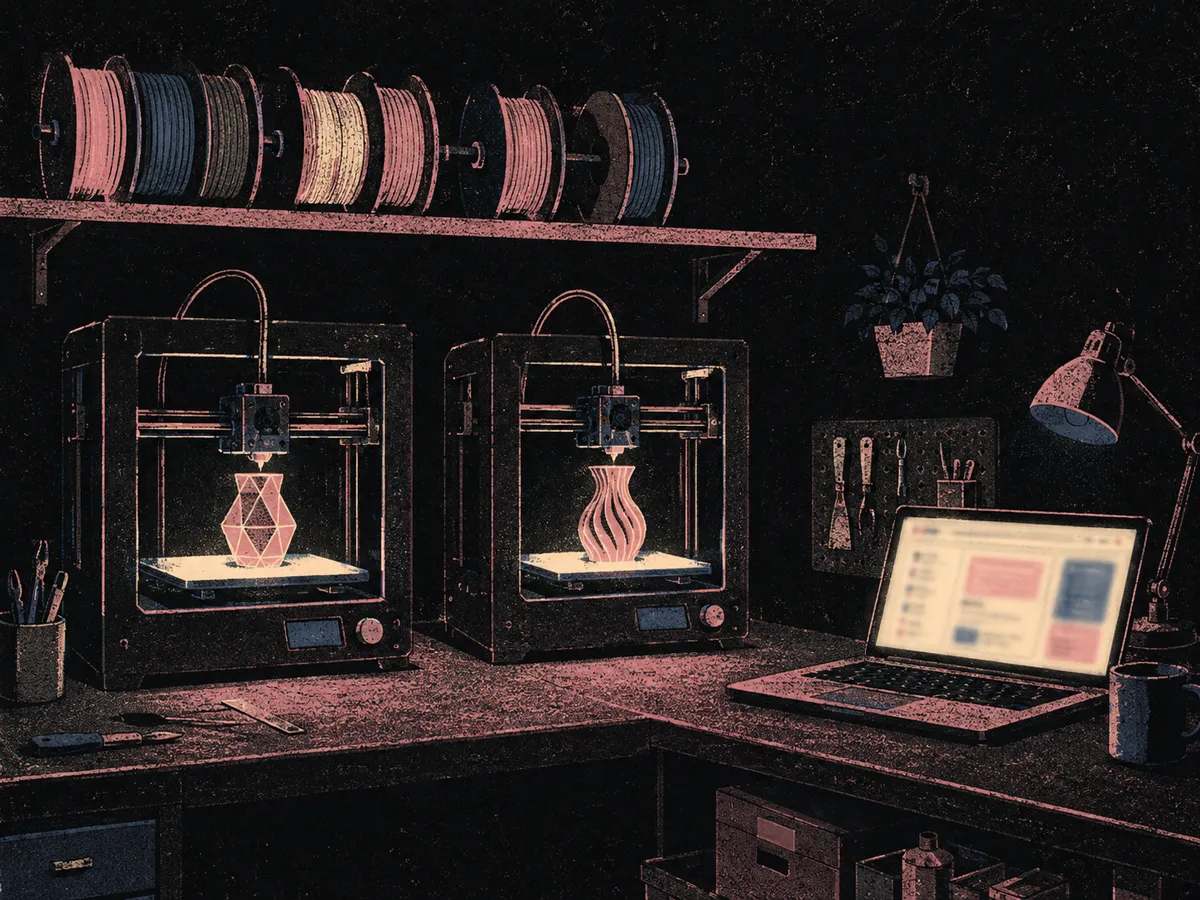
A small 3D printing studio taking orders through back-and-forth messages. We built an order form with live pricing and 3D file upload, automated status emails to customers, and an order tracker the team owns and runs without us.
Illustrative mockup of the order flow. Placeholder records, not live customer data.
- What the system covers
- A single-page order form that previews the customer's 3D file in the browser and measures its volume from the file itself. Live pricing across three quality tiers, with colour, delivery and rush options. An automatic confirmation to the customer, and a notification to the team with the file already attached. Status emails at each stage, from quote sent through to ready for pickup. An order and customer record the team owns and runs without us.
- Delivery
- Built and deployed remotely. The studio runs it from a spreadsheet they already knew how to use.
- Training
- Handover on the order tracker and the status column that triggers each customer email, so the team can move an order along without touching anything technical.
- What changed after launch
- Real orders exposed the weakest link, which was how the 3D file itself reached the team. That path was rebuilt so the file now arrives attached to the order notification instead of being fetched separately. Running since without us.
Contracting company: the daily invoice entry that disappeared
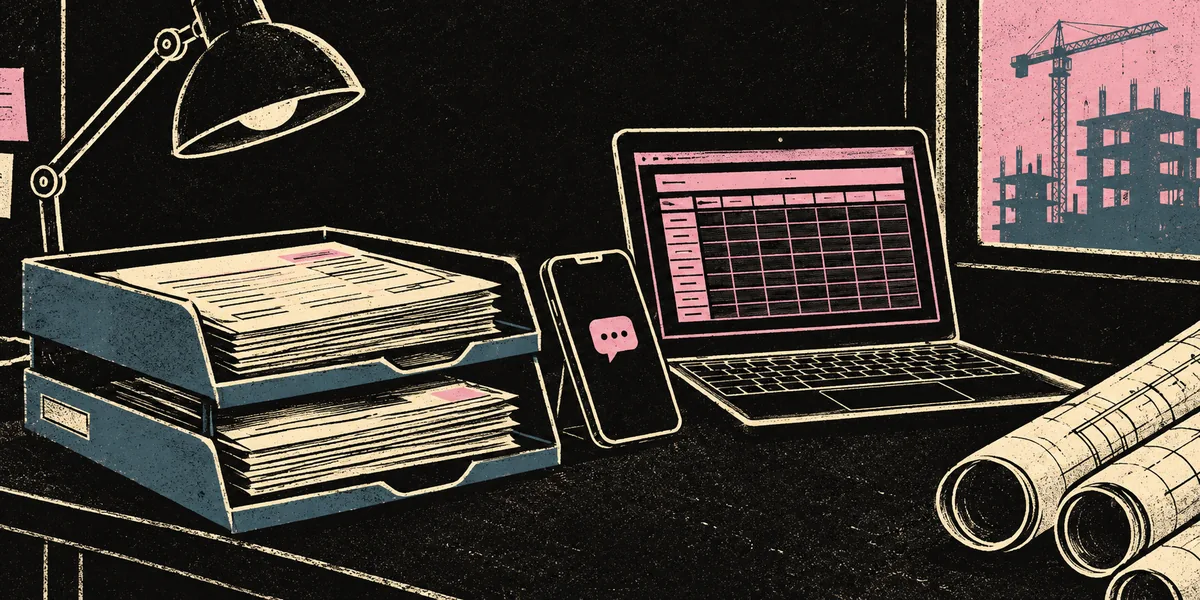
An Abu Dhabi contracting company where supplier invoices were reconciled against the books and typed line by line into the company Excel ledger, 30 to 45 minutes of entry every working day. We did that job by hand first, daily, before automating any of it.
Now an invoice is photographed and sent on WhatsApp. Its fields are read from the image and written straight into the same Excel file the company already runs on. The daily entry takes no time; the month-end reconciliation and review stays human, on purpose.
Illustrative mockup of the intake flow. Placeholder records, not live company data.
- What the system covers
- A WhatsApp intake for supplier invoices: a photo is sent, the invoice fields are read from the image, and the entry is written into the same Excel ledger the company already uses. No new software for the team to learn, no change to the file the accountant works in.
- What we did not build
- No new accounting system, no approval workflow, no supplier portal. The month-end reconciliation and review of every invoice against the ledger stays manual, because that check is where a human belongs.
- Delivery
- Built from inside the finance role, after doing the manual entry daily by hand. The process was lived before it was automated.
- What changed after launch
- The 30 to 45 minutes of daily entry now takes no time. The only manual step left in the invoice flow is the month-end review.
How an engagement works
Free 30-minute call
We identify the problem, the daily operator, and the process to observe.
Process observation
We watch the daily operator do the real work and record the exceptions and handoffs.
Report within 72 hours
What we found, what we'd build, and what it saves you. In plain language, with numbers.
Build in days
We build the system, deploy it on-site, and train your staff on it. Run it yourself, or have us manage it.
More on the process on the how we work page.
Questions businesses ask us
How long does an implementation take?
Our first deployment went from assessment call to live system in 6 days. Most implementations take about a week of build time; larger systems run two to three weeks.
What does an implementation cost?
Projects start at 7,000 AED; most land between 10,000 and 35,000 depending on scope. The exact number comes after the free assessment and is based on the hours the system saves your team, not on time spent building.
Do you only work in Abu Dhabi?
We're based in Abu Dhabi and deploy on-site across the UAE. The bike repair shop build ran in Dubai, with on-site staff training on deployment day.
Want numbers like these for your business?
Start with a free 30-minute call. After we observe the daily operator, the report shows the verified baseline and the target.
One measurable outcome agreed before we start. If it's not hit within 30 days of launch, we keep working at no extra cost until it is.
One measurable outcome, agreed in writing before we start. How the guarantee works →
Not ready to book? Message us on WhatsApp instead.